

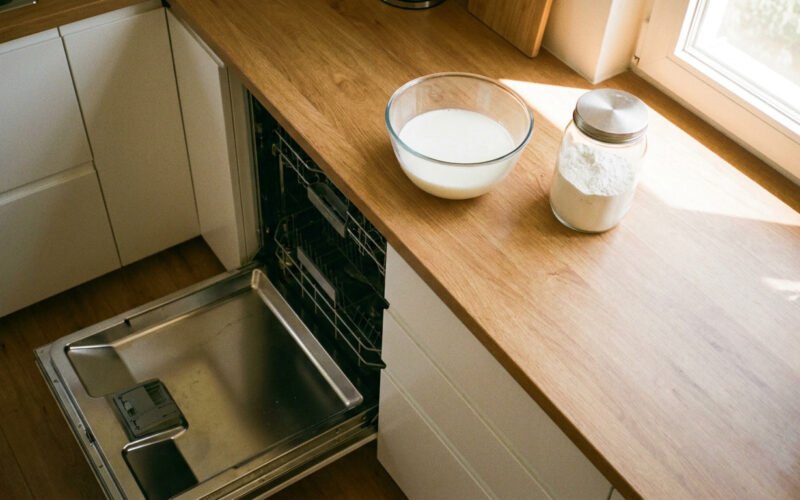
How to Clean a Dishwasher With Vinegar and Baking Soda
Your dishwasher cleans your dishes every day, but who cleans the dishwasher? Over time, food particles, grease, soap scum, and hard water minerals build up inside. The result is a musty smell, cloudy glasses, and plates that don’t come out as clean as they should.
The good news is that you don’t need expensive cleaners. Learning how to clean a dishwasher with vinegar and baking soda takes about 30 minutes of hands-on time and costs only a few dollars. In this guide, you’ll get a simple step-by-step method, safety tips, and a maintenance routine to keep your machine fresh.
Why You Should Clean Your Dishwasher Regularly
A dishwasher is a warm, wet, food-filled space, which makes it a perfect place for bacteria, mold, and mineral deposits to grow. Regular cleaning helps you:
- Remove bad odors caused by trapped food and bacteria
- Prevent limescale and soap scum on the walls and spray arms
- Improve cleaning performance and reduce cloudy glassware
- Prevent clogs and extend the life of your appliance
- Save money on repairs and rewashing dishes
Most experts suggest a deep clean about once a month, or every two months if you use the dishwasher lightly.
Why Vinegar and Baking Soda Work So Well
These two pantry staples tackle different problems:
- White vinegar is mildly acidic. It dissolves hard water deposits, cuts through grease, and helps neutralize odors.
- Baking soda is a gentle alkali and mild abrasive. It lifts stains, scrubs away residue without scratching, and absorbs smells.
Used one after the other, they give you a thorough, low-cost, and non-toxic clean.
Important: Do not pour them in together at the same time. When mixed, they fizz and neutralize each other, which makes both less effective. Use them in two separate steps.
What You Need
- 1 cup of distilled white vinegar
- 1 cup of baking soda
- A dishwasher-safe cup or bowl
- A soft cloth or microfiber towel
- An old toothbrush
- A small pick or toothpick
- Warm water and a little dish soap
Step-by-Step: How to Clean a Dishwasher With Vinegar and Baking Soda
Step 1: Empty the Dishwasher Completely
Take out all dishes, utensils, and racks you can remove. Cleaning an empty machine lets the vinegar and hot water reach every surface.
Step 2: Clear the Drain and Filter
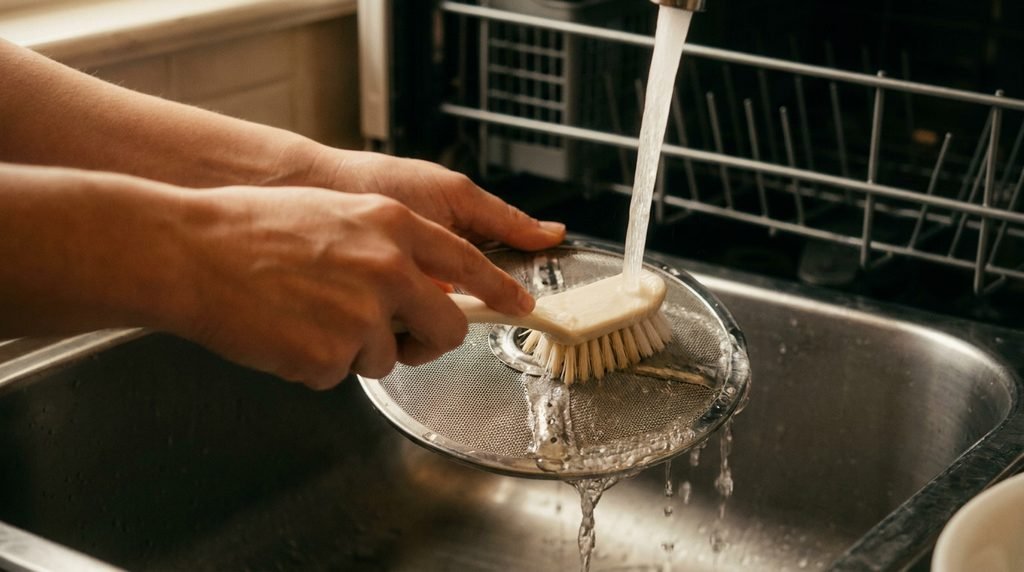
The filter is the number one source of bad smells. Look at the bottom of the tub, usually near the back or under the lower spray arm.
- Twist or lift out the filter (check your manual for your model).
- Remove food scraps, labels, and any debris.
- Wash the filter under warm running water with a little dish soap and the old toothbrush.
- Check the drain opening for bits of glass or food, then put the filter back securely.
Image 2 placement: right after this step.
Step 3: Wipe the Door, Edges, and Gasket
Grime hides in the rubber seal around the door and in the bottom edge. Dip a cloth in warm soapy water and wipe the gasket, door edges, hinges, and control panel area. Use the toothbrush for tight corners. Dry with a clean towel.
Step 4: Check the Spray Arms
Look at the small holes in the spray arms. If they are blocked by hard water scale or food, water can’t spray properly. Use a toothpick to clear each hole. Gently rinse the arms under warm water and reattach them.
Step 5: Run a Vinegar Cycle
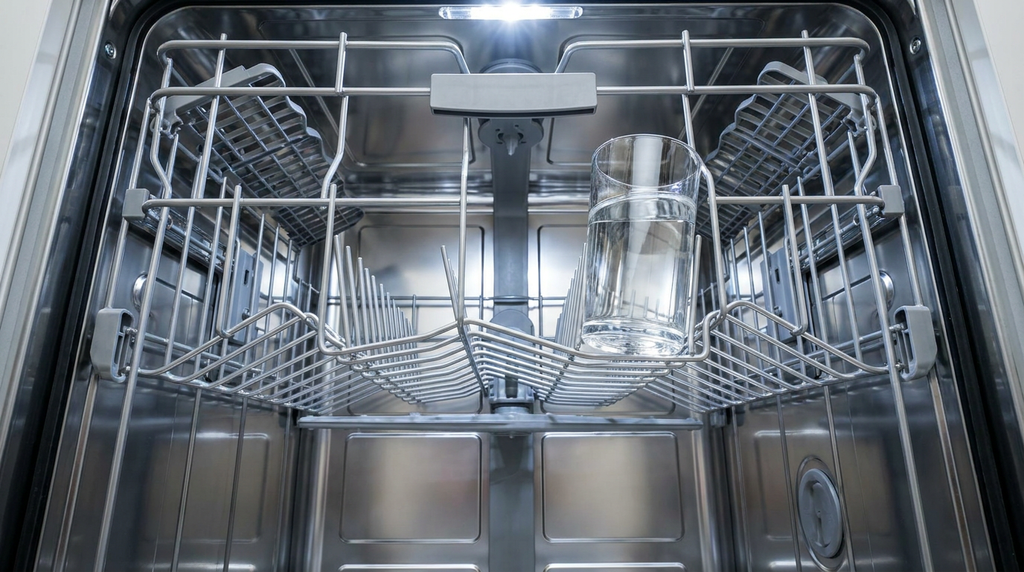
- Place a dishwasher-safe cup or bowl upright on the top rack.
- Pour in 1 cup of white vinegar.
- Run a hot water cycle (the longest, hottest normal cycle) with no dishes inside.
As the cycle runs, the vinegar spreads across the tub, dissolving mineral buildup, loosening grease, and cutting odors.
Step 6: Run a Baking Soda Cycle
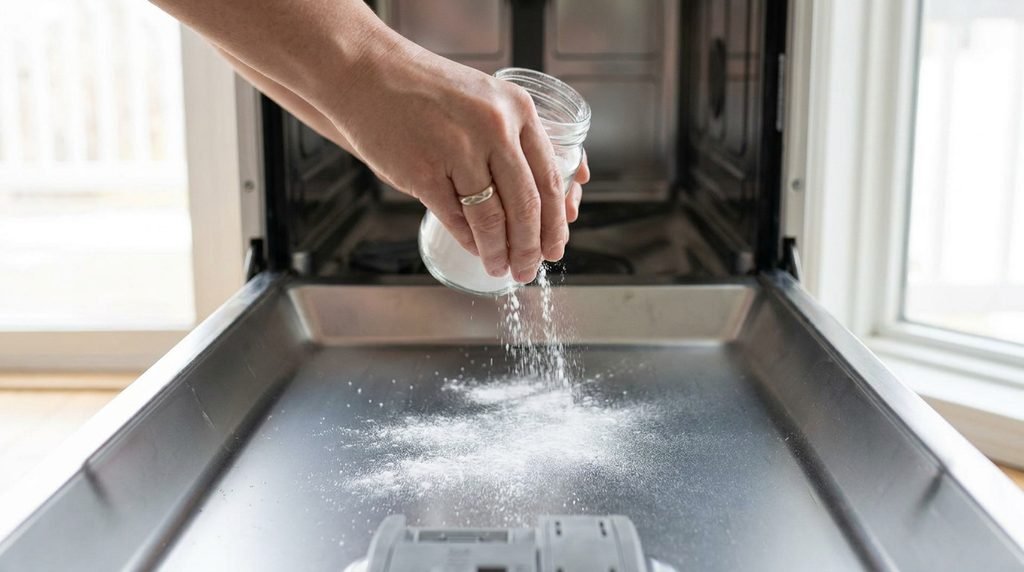
- After the vinegar cycle finishes, sprinkle 1 cup of baking soda evenly across the bottom of the dishwasher.
- Run a short, hot cycle (a quick or rinse cycle works well).
The baking soda freshens the interior, brightens the tub, and absorbs leftover odors. When it finishes, wipe the inside with a dry cloth, and the dishwasher should look and smell fresh.
Quick Tips for Best Results
- Use distilled white vinegar, not apple cider vinegar or cleaning vinegar with a higher acid level, unless your manual says it is safe.
- Never mix vinegar with bleach. This creates toxic fumes. If you want to use bleach, do it on a separate day and only if your manual allows it.
- Check your manual. Some manufacturers warn that frequent vinegar use may wear down rubber gaskets over time. Monthly use is generally considered fine for most machines.
- Keep the door slightly open after the final cycle so the interior can air-dry and stop mold from growing.
- Stainless steel interiors are usually safe with this method, but always wipe them dry afterward to avoid water spots.
What If Your Dishwasher Still Smells?
If bad odors remain after cleaning, try these fixes:
- Check the drain hose. A kinked or clogged hose can keep dirty water sitting in the machine.
- Clean the garbage disposal connection. If your dishwasher drains into a disposal, a smelly disposal can send odors back.
- Repeat the vinegar cycle. Heavy buildup sometimes needs a second round.
- Look for mold. Check under the lower rack and inside the door seal. Scrub visible spots with warm soapy water and a toothbrush.
- Call a professional if the smell continues, as there may be a plumbing or drainage issue.
For more cleaning shortcuts around the house, check out our handy tips from Dr. Homey.
How to Keep Your Dishwasher Clean Longer
A little daily habit goes a long way:
- Scrape large food scraps off plates before loading (no need to fully pre-rinse).
- Clean the filter every 1 to 2 weeks.
- Run the hot water at the kitchen sink for a few seconds before starting a cycle, so the dishwasher gets hot water right away.
- Use a rinse aid to reduce hard water spots.
- Run a monthly deep clean with vinegar and baking soda.
- Leave the door ajar after each cycle so moisture can escape.
Common Mistakes to Avoid
- Pouring vinegar and baking soda together. They cancel each other out, so use them one after the other.
- Skipping the filter. If you don’t clean the filter, the smell will come back quickly.
- Using too much baking soda or soap. Excess powder can leave residue.
- Running a cycle with dishes inside. The cleaning cycle works best on an empty machine.
- Ignoring the manual. Always check what your manufacturer recommends.
Frequently Asked Questions
How often should I clean my dishwasher with vinegar and baking soda?
Once a month is ideal for most homes. If you have very hard water or run the dishwasher daily, you can do it every three to four weeks.
Can I put vinegar and baking soda in the dishwasher at the same time?
It’s better not to. They react and neutralize each other, so you lose most of the cleaning power. Run vinegar first, then baking soda in a separate cycle.
Is it safe to use vinegar in a dishwasher?
For most modern dishwashers, occasional use is safe. Because vinegar is acidic, very frequent use may affect rubber seals over time, so follow your manufacturer’s guidance.
Where do I put the vinegar in the dishwasher?
Place it in a dishwasher-safe cup or bowl on the top rack, standing upright, not in the detergent dispenser.
Why does my dishwasher still smell after cleaning?
The most common causes are a dirty filter, a clogged drain, or trapped food in the spray arms or gasket. Clean those parts again and check the drain hose.
Will this get rid of hard water stains?
Vinegar helps break down light to moderate limescale. For heavy buildup, you may need a commercial descaler or a second vinegar cycle.
Final Thoughts
Knowing how to clean a dishwasher with vinegar and baking soda is one of the easiest and cheapest ways to keep your kitchen fresh and your dishes sparkling. Clear the filter, wipe the seals, run the vinegar cycle, then finish with baking soda, and your machine will run better and last longer.
Make it a monthly habit and you’ll avoid smells, clogs, and cloudy glasses. Explore more simple home care guides in our Cleaning category.