

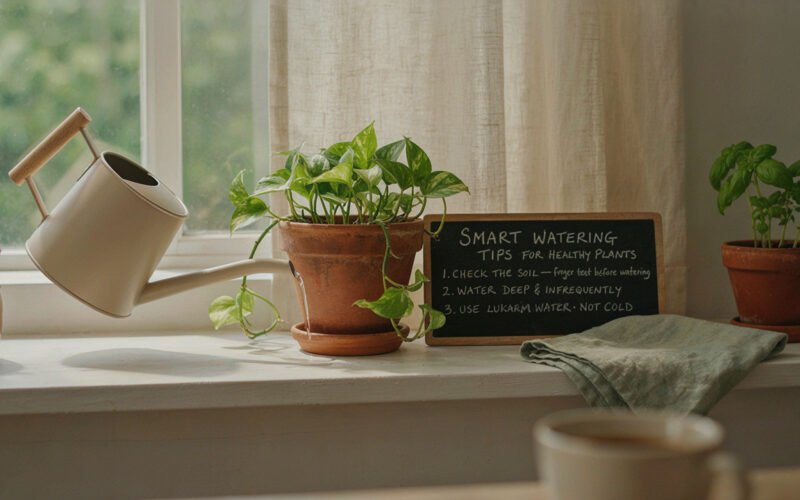
- Check soil moisture before watering.
- Focus water on the plant’s root zone.
- Adjust watering according to weather and season.
- Use mulch and suitable plants to help conserve moisture.
- Avoid treating every plant with the same watering schedule.
Introduction
Proper watering is one of the most important parts of successful garden care. However, giving plants too much or too little water can create problems. Overwatering may contribute to root problems, while underwatering can cause wilting, dry soil, and poor plant growth.
A smart watering routine starts with understanding what your plants actually need. Soil type, weather, plant size, sunlight, season, and container size can all affect watering requirements. Therefore, there is no single schedule that works for every garden.
This Garden Advice Homenumental guide explains practical ways to water plants more effectively. With a few simple habits, you can maintain healthier plants, reduce unnecessary water use, and make garden care easier.
1. Check the Soil Before Watering
One of the easiest ways to improve watering is to check the soil before reaching for the hose. A calendar-based schedule may not reflect current weather or soil conditions.
Insert your finger about an inch into the soil near the plant. If the soil feels dry at that depth, the plant may need water. If it still feels noticeably moist, waiting may be better.
However, different plants have different moisture preferences. Some plants tolerate dry conditions, while others prefer consistently moist soil. Always consider the needs of the specific plant rather than treating the entire garden the same way.
Soil type also matters. Sandy soil tends to drain quickly, while clay-heavy soil can hold water for longer periods. Adding organic matter where appropriate can improve soil structure and help create better conditions for plant roots.
In addition, pay attention to weather. After substantial rainfall, your garden may need little or no additional irrigation.
By checking the soil first, you can avoid watering simply because it is a particular day of the week.
2. Water Deeply and Focus on the Root Zone
When plants need water, applying it effectively matters as much as the amount you use. Instead of lightly wetting the surface, aim to deliver water to the soil around the plant’s root zone.
Water slowly enough that it can soak into the soil rather than running away across the surface. This approach is especially useful for established plants because their roots may extend beyond the immediate area around the stem.
Avoid repeatedly spraying only the leaves when the soil is dry. Directing water toward the soil allows moisture to reach the roots where plants absorb it.
For garden beds, a soaker hose or drip irrigation system can help deliver water closer to plant roots. These methods can also reduce unnecessary wetting of foliage.
Container plants require extra attention because pots have limited soil volume. Water may drain through the container more quickly, especially during hot weather. Check containers regularly and adjust your routine based on their condition.
Most importantly, observe your plants after watering. Their appearance, soil moisture, and growing conditions can tell you whether your approach needs adjustment.
3. Water at the Right Time
Timing can make your watering routine more efficient. In many gardens, watering during the cooler parts of the day can reduce evaporation compared with watering during the hottest period.
Early morning is often a convenient option because temperatures are usually lower and plants have the day ahead. If morning watering is not practical, evening can also work, but avoid routinely keeping plant foliage wet overnight, particularly when disease pressure is a concern.
Weather should guide your decisions as well. During rainy periods, reduce supplemental watering. During hot, dry, or windy conditions, plants may lose moisture more quickly and require closer monitoring.
Newly planted trees, shrubs, flowers, and vegetables may also need more frequent attention while their root systems become established.
Rather than following a rigid timetable, combine weather information with soil checks and plant observations.
A simple routine works well: check the soil, consider recent rainfall, inspect the plants, and then decide whether watering is necessary.
4. Reduce Water Loss With Smart Garden Practices
Good garden design can make watering easier and more efficient. Mulching around suitable plants is one useful practice because mulch can help conserve soil moisture and moderate soil temperature. Keep mulch away from direct contact with plant stems or trunks.
Grouping plants according to similar water requirements can also simplify irrigation. For example, plants with higher moisture needs can occupy one area, while drought-tolerant varieties can grow elsewhere.
Choose plants that are appropriate for your local growing conditions. Well-adapted plants may require less supplemental care once established than plants that struggle in the local environment.
Fix leaking hoses, damaged irrigation components, and poorly positioned sprinklers promptly. A small leak or misdirected spray can waste water and leave some plants too dry.
Rainwater collection may also be an option where local rules and conditions allow it. If you collect rainwater, use safe storage practices and follow local guidance.
Finally, monitor your garden throughout the season. Smart watering is not about using a fixed amount of water every day. It is about giving plants the moisture they need while avoiding unnecessary waste.
Conclusion
Smart watering begins with observation rather than a strict calendar. Check soil moisture, consider recent rainfall, understand each plant’s needs, and adjust your routine as weather conditions change.
Water the root zone carefully and use methods that allow moisture to reach the soil efficiently. In addition, mulch, suitable plant selection, grouping plants by water needs, and maintaining irrigation equipment can help reduce unnecessary water loss.
Remember that every garden is different. A routine that works for a container garden may not work for a large landscape. Therefore, watch your plants and soil and make small adjustments over time.
With these simple Garden Advice Homenumental watering practices, you can create a more efficient routine while giving your plants a better chance to stay healthy and grow well.
Frequently Asked Questions
1. How often should garden plants be watered?
There is no universal watering schedule. Frequency depends on plant type, soil, weather, season, sunlight, and whether the plants are in containers or the ground. Check soil moisture and plant condition before watering.
2. Is it better to water plants in the morning or evening?
Early morning is often a good choice because cooler conditions can reduce evaporation. Evening watering can also work, but regularly leaving foliage wet overnight may increase disease concerns for some plants.
3. How do I know if my plants need water?
Check the soil near the plant. If it feels dry at an appropriate depth for that plant, watering may be necessary. Also look for signs such as wilting or dry soil, while remembering that wilting can have causes other than lack of water.
4. Can you overwater garden plants?
Yes. Too much water can reduce air spaces in the soil and contribute to root problems. Allow the plant’s moisture requirements, soil drainage, and weather conditions to guide watering.
5. Should I water plant leaves or the soil?
In most situations, focus water on the soil around the plant’s root zone. This helps deliver moisture where roots can access it and can reduce unnecessary wetting of foliage.
6. Does mulch help reduce watering?
Mulch can help conserve soil moisture and moderate soil temperature. Use an appropriate mulch for your garden and keep it away from direct contact with plant stems and tree trunks.
7. Do container plants need more frequent watering?
They can. Containers have a limited amount of soil, and some pots can lose moisture quickly, particularly during hot or windy weather. Check container soil regularly instead of following a fixed schedule.
8. What is the best way to save water in a garden?
Use plants suited to your local conditions, water according to actual soil moisture, apply mulch where appropriate, group plants with similar water needs, and maintain irrigation equipment. Drip or soaker systems may also help deliver water efficiently.