

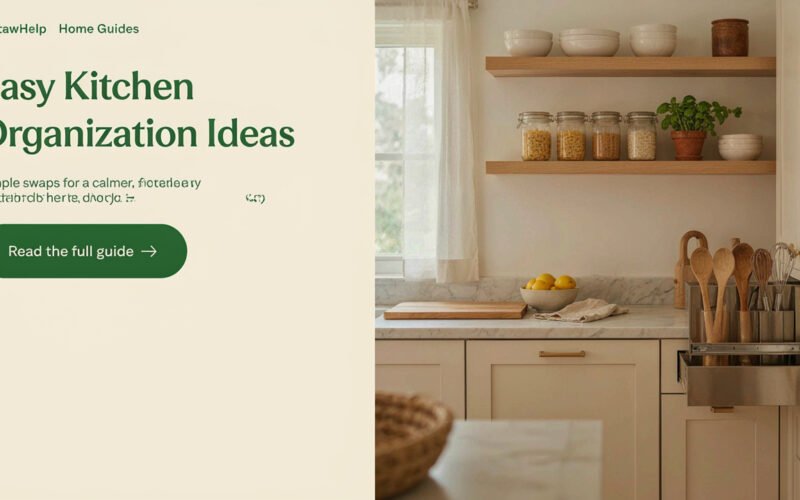
Introduction
Key Takeaways
- Declutter before purchasing additional storage products.
- Organize kitchen items according to how you use them.
- Create practical zones for cooking, preparation, cleaning, and storage.
- Use vertical space when cabinets and countertops are limited.
- Keep frequently used items within easy reach.
- Choose organization systems that are simple enough to maintain every day.
A well-organized kitchen can make cooking, cleaning, and daily routines much easier. However, keeping everything in order can be difficult when cabinets are crowded, countertops collect appliances, and pantry items seem to disappear into the back. The good news is that you do not need an expensive remodel to improve your kitchen. Simple organization systems can make better use of the space you already have. These WutawHelp Home Guides ideas focus on practical solutions that work for everyday homes. Instead of buying storage products immediately, start by removing unnecessary items and deciding where frequently used tools belong. Then, organize each area according to how you actually use it.
1. Declutter Your Kitchen Before Organizing
The best kitchen organization project starts with decluttering. If cabinets and drawers contain items you rarely use, adding more storage will not solve the underlying problem.
Begin with one small area rather than emptying the entire kitchen. Choose a drawer, cabinet, or pantry shelf and remove everything from it. Group similar items together and decide what you actually use.
Check for duplicate utensils, expired food, damaged containers, and appliances that have not been used for a long time. Items that are still useful but rarely needed can be stored in a less accessible location.
Next, return frequently used items to convenient spaces. For example, keep everyday cooking utensils close to the area where you prepare meals. Store baking supplies together if you bake regularly.
This approach creates a simple system based on your habits rather than appearance alone. In fact, practical organization advice often recommends tackling one area at a time instead of attempting the entire home in a single session.
2. Create Zones for Different Kitchen Activities
Kitchen zones can make everyday tasks faster because similar items stay together.
Start by identifying the activities you perform most often. You might create a cooking zone near the stove, a preparation zone around your main counter, a cleaning zone near the sink, and a storage zone for pantry items.
Keep pots, pans, spatulas, and cooking oils close to the stove. Place knives, cutting boards, and mixing bowls near your main preparation area. Similarly, keep dish soap, sponges, and cleaning supplies near the sink.
You can also create a breakfast or coffee station if those items are used every morning. Store coffee, tea, mugs, and frequently used appliances together when space allows.
The goal is not to create complicated rules. Instead, each zone should reduce unnecessary movement while cooking.
Before buying organizers, observe your normal routine for a few days. You may discover that simply moving frequently used items closer to where you use them solves much of the problem.
3. Make Better Use of Cabinets, Drawers, and Vertical Space
Kitchen storage often becomes inefficient because items are stacked without a clear system. Fortunately, small changes can improve accessibility.
Start with cabinet shelves. Place heavier items on lower shelves and frequently used products where they are easy to reach. Use shelf risers when appropriate to create additional levels inside tall cabinets.
Drawers can benefit from dividers. Separate cooking utensils, measuring tools, and small accessories instead of allowing everything to become one large pile.
Do not ignore vertical space. Wall-mounted racks can hold selected utensils, while hooks can provide convenient storage for items that are suitable for hanging. However, avoid overcrowding walls because excessive storage can make the kitchen look cluttered.
For small kitchens, vertical storage can be especially useful. Recent kitchen organization guidance also highlights walls as valuable storage space when cabinets and counters are limited.
Use clear containers only when they genuinely improve visibility or access. You do not need matching containers for every item. Good organization should make your kitchen easier to use, not create extra maintenance.
4. Keep Your Countertops Clear and Easy to Maintain
Countertop clutter can make a kitchen feel smaller than it actually is. The simplest solution is to keep only regularly used items on the counter.
Start by removing everything and cleaning the surface. Then return only the appliances and objects you use frequently.
For example, a coffee maker may deserve a permanent place if you use it every morning. A rarely used appliance may be better stored inside a cabinet or pantry.
You can also create a small landing area for items that you use while cooking. Keep frequently needed ingredients together rather than spreading bottles and containers across the entire counter.
After cooking, spend a few minutes returning items to their designated locations. This habit prevents clutter from building up again.
Remember that organization is an ongoing system rather than a one-time project. A kitchen can look perfectly organized today but become cluttered again if every item does not have a convenient home.
Therefore, choose storage locations that are realistic for your household. The easiest system to maintain is usually the one that requires the fewest extra steps.
5. Organize Your Pantry and Refrigerator by Use
A well-organized pantry makes it easier to see what you have and reduces unnecessary purchases.
Start by removing expired products and grouping similar foods together. Keep breakfast items in one area, cooking ingredients in another, and snacks in an easily accessible location.
Place frequently used products toward the front. Less frequently used ingredients can go farther back or on higher shelves.
For open packages, use sealed containers when appropriate to protect food and make contents easier to identify. Always follow food-storage recommendations for the products you store.
The refrigerator deserves a similar system. Group similar foods together and avoid blocking vents or overpacking shelves. Keep older items visible so you can use them before newer purchases.
You can also create a simple inventory habit. Before grocery shopping, take a quick look through your pantry and refrigerator. This can help prevent buying products you already have.
The goal is not to make your pantry look like a showroom. It should help you find ingredients quickly, maintain food visibility, and make everyday meal preparation easier.
Conclusion
Good kitchen organization does not require expensive cabinets or a complete renovation. Start by removing items you no longer need, then create simple zones based on your daily activities. Use cabinets, drawers, walls, and pantry shelves more efficiently while keeping frequently used items easy to reach. Most importantly, choose systems that your household can maintain consistently. These WutawHelp Home Guides ideas are designed around practical improvements rather than perfection. A few small changes can reduce countertop clutter, make cooking more convenient, and help you find what you need faster. Once your kitchen has a place for each frequently used item, maintaining the system becomes much easier.
Frequently Asked Questions
1. What is the first step in organizing a kitchen?
Start by decluttering. Remove unnecessary, duplicate, expired, or rarely used items before adding new storage solutions. This gives you a clearer idea of how much storage you actually need.
2. How can I organize a small kitchen?
Use vertical wall space, shelf risers, drawer dividers, hooks, and compact storage solutions. Keep frequently used items accessible and avoid filling countertops with appliances you rarely use.
3. How should I organize kitchen cabinets?
Group similar items together and place frequently used products in easy-to-reach locations. Store heavier items securely on lower shelves and use dividers or risers where they improve access.
4. How do I keep kitchen countertops clutter-free?
Keep only everyday items on the counter. Give appliances and cooking tools a designated storage location and return them after use.
5. Should I use containers to organize my pantry?
Containers can improve visibility and organization, but they are not necessary for every food item. Use them where they provide a clear benefit and choose appropriate food-safe storage options.
6. How often should I reorganize my kitchen?
Do a quick reset regularly and review problem areas every few months. If a particular drawer or cabinet repeatedly becomes messy, the storage system may need to be changed.
7. What should I keep near the stove?
Keep frequently used cooking tools and ingredients close to the stove, provided they can be stored safely away from heat. This may include selected utensils, pans, and commonly used cooking ingredients.
8. How can I maintain an organized kitchen?
Return items to their designated locations after use, clean counters regularly, check pantry supplies, and remove unnecessary items before clutter builds up again.