

Introduction
A relaxing outdoor space can turn an ordinary backyard, patio, or garden into a comfortable place to unwind. You do not need a large budget or a huge yard to create that feeling. Instead, focus on the features that make the space comfortable, private, attractive, and easy to maintain.
Key Takeaways
- Design the garden around how you actually use the space.
- Choose plants that suit your climate and maintenance routine.
- Use seating, lighting, and privacy to improve comfort.
- Add a few meaningful features instead of overcrowding the garden.
- Keep the design simple enough to maintain throughout the year.
A successful garden retreat should work for the way you actually live. For example, you might want a quiet corner for reading, a comfortable area for morning coffee, or an inviting space for spending time with family. The best design starts with those everyday needs.
This Garden Guide Homenumental approach focuses on practical choices, including seating, greenery, lighting, privacy, and simple decorative features that can make an outdoor area feel more peaceful.
1. Start With a Comfortable Layout
Before buying furniture or decorative items, look carefully at your available space. Notice where sunlight falls during different parts of the day, where water collects after rain, and which areas already feel comfortable.
Next, decide how you want to use the space. A small patio might work well with two chairs and a compact table. Meanwhile, a larger backyard could include separate areas for dining, relaxing, and gardening.
Keep pathways open so people can move around without bumping into furniture. Also, avoid filling every empty section with decorations. Leaving some open space can make a garden feel calmer and more spacious.
Comfort should remain a priority. Choose outdoor seating with supportive cushions and enough room to sit comfortably. If your area receives strong afternoon sun, consider placing seating beneath a pergola, tree, umbrella, or other suitable shade structure.
Finally, test the layout before making permanent changes. Move chairs and tables around for a few days and see which arrangement feels most natural.
2. Add Plants That Create a Calm Atmosphere
Plants can make an outdoor space feel more natural and inviting. However, you do not need dozens of varieties to create an attractive garden.
Start by selecting plants that suit your local climate, available sunlight, soil conditions, and maintenance preferences. Native or well-adapted plants can often be easier to manage because they are suited to local growing conditions.
Use different heights to create visual interest. Low-growing plants can define pathways, medium-height shrubs can add structure, and taller plants or small trees can provide shade and privacy.
You can also include herbs or fragrant plants near seating areas. Their colors, textures, and natural scents can make the space feel more welcoming.
For smaller gardens, use containers to introduce greenery without major landscaping work. Group several containers at different heights to create a layered appearance.
Most importantly, choose plants you can realistically maintain. A relaxing garden should not become a source of constant work. Select varieties that match the amount of time you want to spend watering, pruning, feeding, and cleaning.
3. Use Lighting and Privacy to Improve the Mood
Good outdoor lighting can make a garden more useful after sunset while creating a softer atmosphere. Instead of relying on one bright light, consider using several gentle light sources around the space.
Path lights can help define walkways. Small accent lights can highlight plants or architectural features. String lights can add a warm decorative touch around a seating area, while lanterns can provide another flexible option.
Safety matters as well. Keep walkways and steps adequately visible, and make sure outdoor electrical equipment is suitable for outdoor use.
Privacy can make an outdoor space feel much more relaxing. If your backyard faces neighboring homes or a busy street, consider natural screening options such as shrubs, trees, trellises, or suitable climbing plants.
A privacy screen does not have to block everything. Partial screening can create a sense of separation while allowing sunlight and airflow to continue reaching the garden.
Before installing a permanent screen, consider its height, maintenance requirements, local regulations, and impact on nearby plants.
4. Add Simple Features That Encourage Relaxation
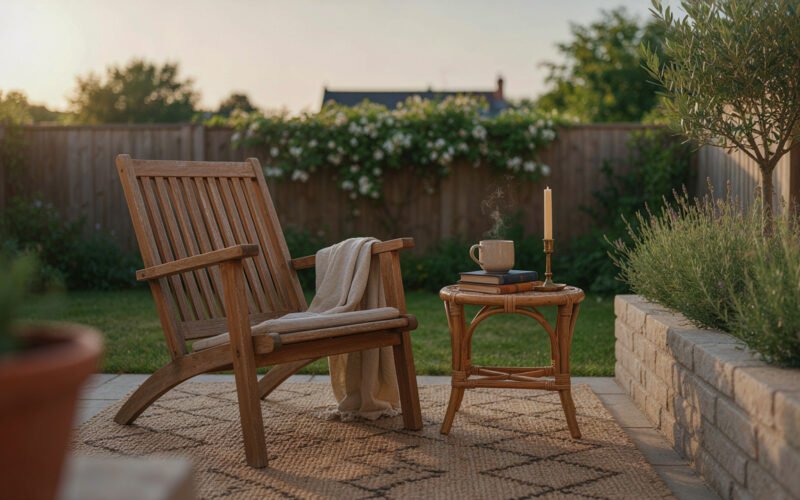
Small details can give an outdoor space its personality. A comfortable reading chair, outdoor rug, small side table, or weather-resistant cushions can make a basic patio feel more inviting.
Water features can also become a focal point. A small fountain or compact water feature may suit a garden where space is limited. However, consider maintenance, water use, electrical requirements, and local conditions before installing one.
Another option is a dedicated garden corner. Add a bench beneath a tree, surround it with suitable plants, and create a simple path leading toward it. This gives the garden a clear destination without requiring a major renovation.
Natural materials can also contribute to a relaxed appearance. Wood, stone, gravel, and other outdoor-friendly materials can complement greenery and create visual texture.
Keep the design balanced. Too many decorations, colors, or competing features can make the space feel crowded rather than peaceful.
The goal is not to create a showroom. Instead, build an outdoor area that feels comfortable enough to use regularly.
Conclusion
Creating a relaxing outdoor space does not require an expensive makeover. Start with a practical layout, comfortable seating, suitable plants, and enough privacy for your needs. Then, add lighting and a few carefully selected features to create atmosphere without overcrowding the area.
The most successful garden is one that fits your lifestyle and remains manageable over time. Choose plants that suit your conditions, use durable outdoor materials, and design the space around activities you genuinely enjoy.
Whether you have a compact balcony, small patio, or large backyard, thoughtful planning can turn it into a peaceful extension of your home.
Frequently Asked Questions
1. How can I make my garden feel more relaxing?
Focus on comfortable seating, suitable greenery, privacy, soft lighting, and an uncluttered layout. Choose features based on how you actually plan to use the garden.
2. What plants are best for a relaxing garden?
The best plants depend on your climate, soil, sunlight, and maintenance preferences. Native or well-adapted plants are often practical choices because they can suit local growing conditions.
3. How can I create a relaxing garden on a small budget?
Start with inexpensive improvements such as rearranging existing furniture, adding containers, improving planting beds, using simple outdoor lighting, and creating a small seating corner. Make larger upgrades gradually.
4. How do I add privacy to my backyard?
You can use shrubs, trees, trellises, climbing plants, or suitable privacy screens. Consider sunlight, airflow, maintenance, and local requirements before choosing a permanent solution.
5. What type of lighting works well in a relaxing outdoor space?
Path lights, subtle accent lighting, lanterns, and suitable outdoor string lights can create a comfortable atmosphere. Use adequate lighting around steps and walkways for safety.
6. Do I need a large garden to create a relaxing outdoor space?
No. A small patio, balcony, courtyard, or compact backyard can become a relaxing area. The key is to use the available space efficiently and avoid unnecessary clutter.
7. Should I add a water feature to my garden?
A water feature can become an attractive focal point, but it is not essential. Consider maintenance, water use, electricity, and available space before installing one.
8. How can I keep a relaxing garden easy to maintain?
Choose plants suited to your local conditions, group plants with similar watering needs, use appropriate mulch where suitable, and avoid adding more features than you can maintain. A simple design is often easier to manage.