


How to Organize Kitchen Cabinets on a Budget
Messy kitchen cabinets can make cooking stressful. Pots slide out when you open the door, lids go missing, and you dig through piles just to find one bowl. Many people think the fix is expensive custom shelving or a full remodel, but that’s not true
You can learn how to organize kitchen cabinets on a budget with a few simple tools, some smart habits, and items you may already own. In this guide, you’ll get a clear step-by-step plan, low-cost storage ideas, and tips to keep your cabinets tidy for the long term.
Why Organizing Your Kitchen Cabinets Matters
An organized cabinet is more than a nice look. It helps you:
- Find ingredients, pots, and tools quickly
- Save time while cooking and cleaning up
- Avoid buying duplicates of things you already own
- Reduce food waste by seeing what you have
- Protect cookware and dishes from scratches and chips
- Make a small kitchen feel bigger and calmer
Best of all, you can do most of it in one weekend with very little money.
Before You Start: What You Need
You don’t need to buy much. Start with these basics:
- Boxes or bags for Keep, Donate, and Toss
- All-purpose cleaner and a few cloths
- Shelf liner (optional, but cheap and useful)
- Measuring tape
- Pen and sticky notes or masking tape for labels
- Items from around the house: shoe boxes, baskets, jars, and cardboard boxes
Budget tip: Don’t buy any organizers until you finish decluttering. You may find you need fewer than you thought.
Step-by-Step: How to Organize Kitchen Cabinets on a Budget
Step 1: Empty One Cabinet at a Time
Taking everything out of every cabinet at once creates a huge mess. Work on one cabinet or one section at a time, such as the one near the stove, then the one near the sink.
Place items on the counter or table so you can see everything clearly.
Step 2: Declutter Without Mercy
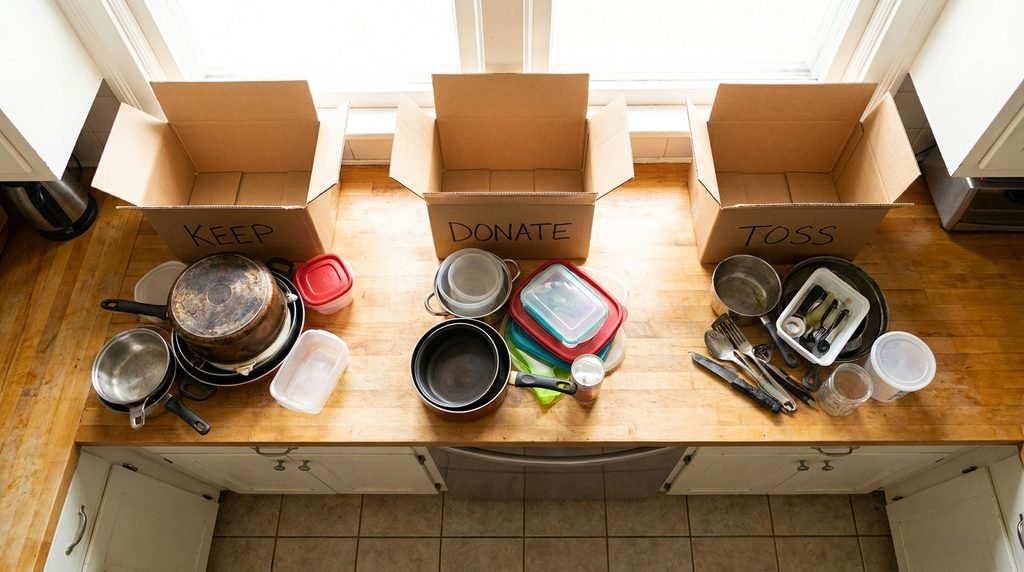
Sort every item into one of three groups:
- Keep: Things you use often and that are in good shape
- Donate: Good items you no longer need
- Toss: Broken, stained, or expired items
Quick questions to help you decide:
- Have I used this in the past 6 months?
- Do I have a duplicate?
- Is it damaged or missing parts?
Common things to let go of include chipped mugs, mismatched lids, extra plastic containers, and single-use gadgets. If you want a full decluttering plan, read our guide on how to declutter a small kitchen step by step.
Step 3: Clean the Inside of the Cabinet
Since the cabinet is empty, wipe down shelves, corners, and the inside of the doors with warm soapy water. Let everything dry fully.
For a fresh and protected surface, add a cheap shelf liner. It keeps dishes from sliding and makes future cleaning easier.
Step 4: Group Items by Use
Sort the things you’re keeping into categories, such as:
- Everyday dishes and glasses
- Pots and pans
- Baking tools and pans
- Food storage containers
- Spices and oils
- Pantry items and canned goods
Grouping like items together is the secret of every well-organized kitchen.
Step 5: Store Items Close to Where You Use Them
Placing things in smart spots saves steps and effort:
- Pots and pans near the stove
- Spices and oils near the cooking area
- Plates and glasses near the dishwasher or sink
- Baking items near the prep area
- Food containers in a lower cabinet that is easy to reach
Step 6: Put Everyday Items at Eye Level
Use the “golden zone” between your shoulders and knees for the items you use most. Keep heavy items low and lightweight or rarely used items on the top shelves.
Step 7: Add Cheap Storage Solutions
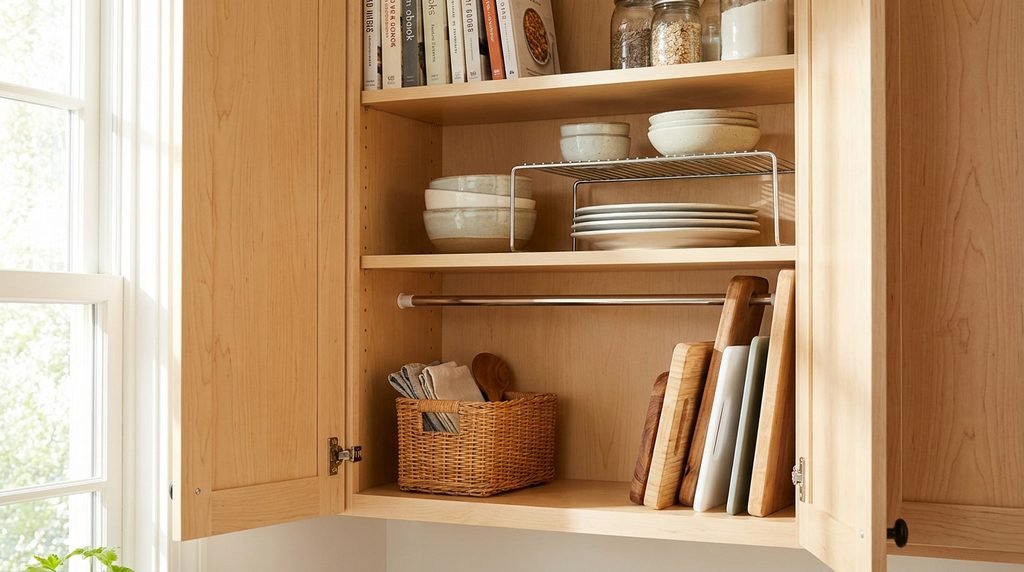
Now is the time to buy only the items you truly need. Many of these cost very little, and some you can make at home:
- Stackable shelf risers: Double your space inside a cabinet. Dollar stores and budget retailers often sell them.
- Tension rods: Place one upright inside a cabinet to hold cutting boards, baking sheets, and trays on their edges.
- Over-the-door hooks or racks: Perfect for lids, foil, or cleaning supplies.
- Wire baskets or plastic bins: Group snacks, packets, and small items so nothing gets lost.
- Lazy Susan (turntable): Makes corner and spice cabinets easy to use.
- Command hooks: Hang measuring cups or small tools on the inside of cabinet doors.
- Magazine holders: Use them to hold foil, wraps, and baking sheets standing up.
- Mason jars and recycled jars: Store dry goods like rice, pasta, and sugar.
- Shoe boxes: Sort packets, tea bags, and small items.
For even more ways to improve your kitchen without spending a lot, you can browse our affordable kitchen remodeling tips.
Step 8: Use the Cabinet Doors
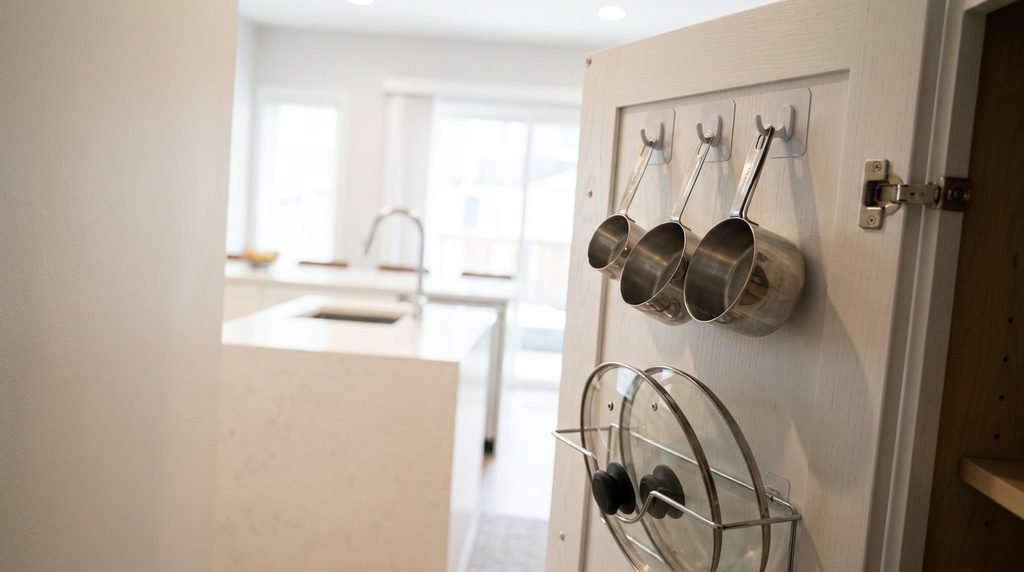
The inside of cabinet doors is wasted space in most homes. Add:
- Small adhesive hooks for measuring cups and spoons
- A slim hanging organizer for pot lids
- A small rack for spice jars or cleaning sprays
Just check that the door still closes properly after adding items.
Step 9: Label Everything
Labels keep the system running. Use masking tape and a marker, or a label maker if you already have one. Label shelves, bins, and jars so everyone in your home knows where things go.
Step 10: Take a Photo and Review
Take a quick photo of each organized cabinet. This helps you remember the layout and spot what to adjust later. After a week of normal use, make small changes to anything that isn’t working.
Cabinet-by-Cabinet Ideas on a Budget
Pots and Pans Cabinet
- Stack pans with a paper towel or cloth between them to prevent scratches.
- Store lids upright in a magazine holder or on a lid rack.
- Keep the heaviest pots on the bottom shelf.
Dish and Glassware Cabinet
- Use shelf risers so plates and bowls don’t stack too high.
- Group glasses by type and keep everyday ones in front.
- Store rarely used serving dishes on the top shelf.
Spice Cabinet
- Put spices in alphabetical order or by cuisine.
- Use a turntable so you can see every jar.
- Use small bins or a tiered rack so the back row is visible.
Pantry Cabinet
- Put new items behind older ones, so older items get used first.
- Decant dry goods into clear jars or containers.
- Keep snacks in one basket, baking supplies in another.
Under-the-Sink Cabinet
- Use a small bin or caddy for cleaning sprays.
- Add a tension rod to hang spray bottles by their triggers.
- Keep a small tray at the bottom to catch leaks.
Corner Cabinet
- Install a lazy Susan to reach items easily.
- Keep rarely used appliances or bulky items on the deeper shelves.
Free and Cheap DIY Ideas
You don’t need to buy new products to get great results. Try these:
- Cardboard dividers: Cut and fold sturdy cardboard to separate baking sheets or trays.
- Reused jars: Store grains, nuts, or pasta.
- Shoe boxes covered in contact paper: Make attractive, matching bins.
- Old baskets: Group snacks or packets.
- A cheap tension rod: Create a vertical storage space for cutting boards.
- A wooden crate: Turn it into a small shelf.
Habits to Keep Your Cabinets Organized
A good system only works if you maintain it. Try these easy habits:
- Put things back right after use.
- Follow a “one in, one out” rule: When you buy something new, let go of an old item.
- Do a 10-minute reset once a week.
- Review the cabinets every 3 months to remove expired or unused items.
- Avoid overbuying. Buy only what fits comfortably.
- Keep similar items together.
Common Mistakes to Avoid
- Buying organizers before decluttering. You may spend money you don’t need to.
- Overfilling shelves. Leave a little breathing room so things stay easy to reach.
- Storing heavy items up high. This is unsafe and hard to manage.
- Putting everyday items at the back. Keep frequently used items at the front.
- Skipping labels. Without them, clutter returns quickly.
- Trying to do the whole kitchen in one day. Take it one cabinet at a time.
Frequently Asked Questions
What is the cheapest way to organize kitchen cabinets?
Start by decluttering for free, then use what you already own, such as shoe boxes, jars, and baskets. If you need to buy items, shelf risers, tension rods, and inexpensive bins give the most value.
How do I organize kitchen cabinets without buying anything?
Empty, clean, and sort your items by category. Place everyday items at eye level and store similar things together. Reuse boxes, jars, and baskets as dividers and containers.
How do I organize pots and pans in a small cabinet?
Stack them by size with a cloth between them, store lids upright in a holder, and keep the heaviest pot on the bottom. A tension rod or door-mounted rack can free even more space.
What should go in the top cabinets?
Keep rarely used items there, such as seasonal serving dishes, extra appliances, and large platters. Keep lighter things up high for safety.
How often should I reorganize my kitchen cabinets?
A quick tidy once a week and a deeper review every 3 to 6 months is enough for most homes.
Are cabinet organizers worth it?
Yes, as long as you buy the right ones after you declutter. A few well-chosen organizers can double your usable space and cost very little.
Final Thoughts
Learning how to organize kitchen cabinets on a budget is mostly about planning and habits, not spending. Clear each cabinet, sort by use, store items where you need them, and add just a few low-cost helpers like shelf risers, bins, and tension rods. Label your spaces and keep up small daily habits, and your kitchen will stay neat and easy to use.
Want more ideas for your cooking space? Visit our Kitchen category for more practical guides