


A shiny faucet can make a whole bathroom look cleaner. But if yours is covered in white, chalky spots or crusty buildup around the base and spout, it can look dull and neglected, even when you clean it often.
Those marks are hard water stains, and they are very common. The good news is that you can remove them with simple household items and a little patience. In this guide, you’ll learn how to remove hard water stains from a faucet step by step, how to treat different finishes safely, and how to stop the stains from coming back.
What Causes Hard Water Stains on Faucets?
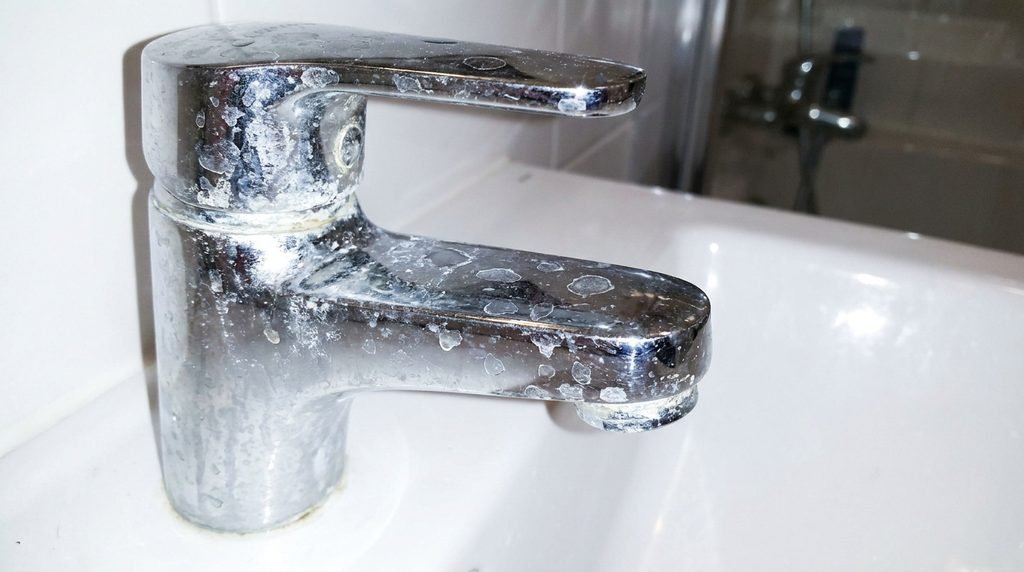
Hard water contains high levels of minerals, mainly calcium and magnesium. When water droplets dry on your faucet, the water evaporates but the minerals stay behind. Over time, these deposits build up into white or cloudy marks, also called limescale.
You are more likely to see them if:
- Your home has hard water
- You don’t wipe the faucet dry after use
- Water drips around the base or aerator
- The bathroom is humid and surfaces stay wet for long
Left alone, limescale can harden, clog the aerator, reduce water flow, and even damage the faucet’s finish.
What You Need
Gather these before you begin:
- Distilled white vinegar
- Baking soda
- A lemon (optional)
- A small bowl or zip-top bag
- Soft microfiber cloths
- An old toothbrush or soft-bristle brush
- A toothpick or small pin
- Rubber bands or tape
- Paper towels or old rags
- Dish soap and warm water
- Rubber gloves
Avoid steel wool, rough scouring pads, and harsh abrasive powders. They can scratch the finish and make future stains stick more easily.
Check Your Faucet Finish First
Before using any acidic cleaner, identify your finish, because not every finish handles vinegar the same way.
| Finish | Vinegar Safe? | Notes |
|---|---|---|
| Chrome | Yes, short soak | Most durable and easiest to clean |
| Stainless steel | Yes, short soak | Wipe with the grain and dry well |
| Brushed nickel | Use with care | Limit contact time and dilute if unsure |
| Brass (lacquered) | Not recommended | Acid can damage the protective coating |
| Oil-rubbed bronze | Not recommended | Use mild soap and water only |
| Matte black | Not recommended | Acid can dull or stain the finish |
If you are unsure, check the manufacturer’s instructions or test the cleaner on a small hidden spot first.
Step-by-Step: How to Remove Hard Water Stains From a Faucet
Step 1: Wipe Away Loose Dirt
Start by cleaning the faucet with warm water, a little dish soap, and a soft cloth. This removes soap residue, toothpaste, and surface grime so your cleaner can focus on the mineral deposits.
Step 2: Soak the Faucet With Vinegar
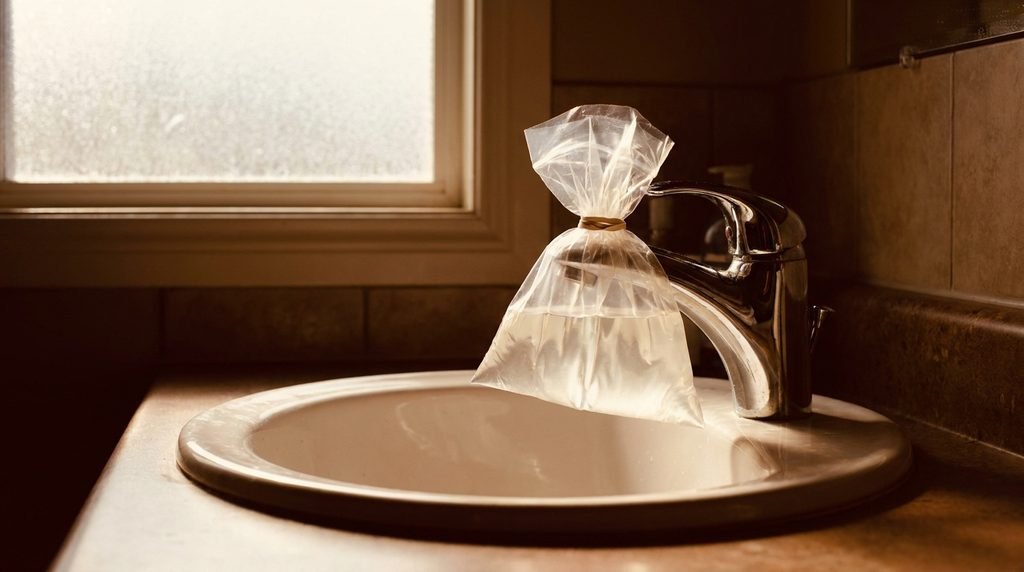
This is the most effective method for chrome and stainless steel faucets.
- Pour white vinegar into a zip-top bag or a small plastic bag.
- Place the bag over the faucet head so the stained area is fully covered.
- Secure it with a rubber band or tape.
- Leave it for 30 minutes to 1 hour (about 15 to 20 minutes for more delicate finishes like brushed nickel).
The mild acid in vinegar dissolves limescale, so you don’t have to scrub hard.
If the faucet is too big or awkward for a bag, soak a cloth or paper towel in vinegar and wrap it around the stained area instead. Re-wet it if it starts to dry.
Step 3: Scrub Gently
After soaking, remove the bag or cloth. Use an old toothbrush to scrub the spout, handles, and base in small circles. Pay extra attention to crevices where minerals gather. A toothpick helps with tight corners and small holes.
Step 4: Clean the Aerator
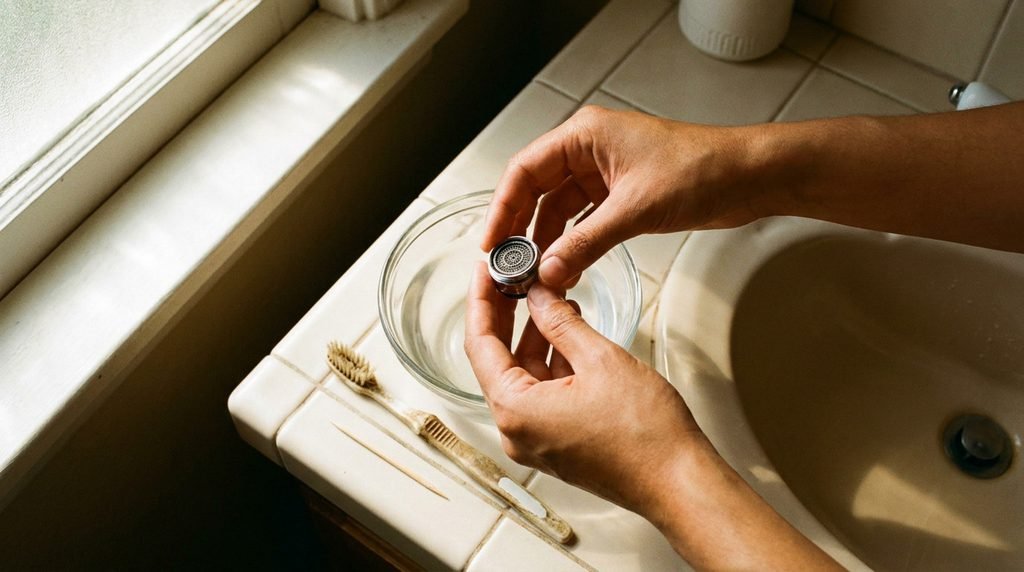
The aerator is the small screen at the tip of the spout. It often hides the thickest buildup and can cause uneven or weak water flow.
- Unscrew the aerator by hand, or use a cloth and pliers gently if it’s tight.
- Soak it in a bowl of white vinegar for about 30 minutes.
- Scrub it with a toothbrush and clear any holes with a toothpick.
- Rinse and screw it back on.
Step 5: Treat Stubborn Spots With a Baking Soda Paste
If some stains remain, mix 2 tablespoons of baking soda with 1 tablespoon of water to make a thick paste. Apply it to the stain, let it sit for 5 to 10 minutes, then rub gently with a soft cloth or toothbrush. Baking soda is a mild abrasive, so it lifts stains without harsh scratching.
Step 6: Try Lemon for Light Stains
Lemon juice is a gentler natural acid and leaves a fresh scent. Cut a lemon in half and rub it directly on the stained areas, or soak a cloth in lemon juice and wrap it around the faucet for 10 to 15 minutes. Then wipe and rinse. This works best on light to medium stains and on finishes where you want a milder option.
Step 7: Rinse and Dry Completely
Rinse the faucet with clean water to remove all cleaner. Then dry it right away with a soft microfiber cloth. Don’t skip this step, because leftover water drops are what create new spots.
Step 8: Buff for Shine
Give the faucet a quick buff with a clean, dry cloth. For chrome, a tiny drop of baby oil or mineral oil on a cloth can add shine and help water bead off. Wipe off any extra so the surface isn’t greasy.
For more simple home care ideas, check out our handy tips from Dr. Homey.
How to Remove Hard Water Stains From the Base of the Faucet
The area where the faucet meets the sink often gets the heaviest crust because water collects there.
- Wrap a vinegar-soaked cloth or paper towel around the base for 20 to 30 minutes.
- Scrub the edges with a toothbrush.
- Use a toothpick to clear gunk from small gaps.
- Rinse and dry thoroughly.
Keep vinegar away from natural stone countertops like marble or granite, since acid can damage them. Protect the stone with a towel while you clean.
Tough Buildup: What to Do When Stains Won’t Budge
If your faucet has heavy, old limescale, try these options:
- Repeat the vinegar soak a second time and let it stay a little longer on durable finishes.
- Use a commercial limescale remover made for faucets. Follow the label directions and make sure it’s safe for your finish.
- Use a melamine sponge (a “magic eraser”) lightly dampened, on chrome or stainless steel.
- Call a plumber if corrosion, leaks, or damaged parts appear beneath the buildup.
Safety Tips You Should Know
- Never mix vinegar with bleach. The combination releases dangerous chlorine gas.
- Don’t mix different cleaning products at the same time.
- Ventilate the bathroom by opening a window or turning on the fan.
- Wear gloves to protect your skin.
- Don’t leave acidic cleaners on delicate finishes for long.
- Rinse well after cleaning to remove any acid residue.
How to Prevent Hard Water Stains on Faucets
Prevention is much easier than scrubbing. Build these small habits:
- Wipe the faucet dry after each use, especially after brushing teeth or washing your face.
- Do a quick weekly wipe with a damp cloth and dry it right away.
- Soak the aerator every month or two to stop buildup early.
- Use a water softener or a showerhead and faucet filter if your water is very hard.
- Apply a thin layer of car wax or a protective polish to chrome faucets, which helps water bead off. Wipe off any extra.
- Fix leaks and drips. Slow drips leave constant mineral trails.
- Keep the bathroom ventilated to reduce moisture.
Common Mistakes to Avoid
- Using abrasive scrubbers. They scratch the finish and trap more minerals later.
- Leaving vinegar on too long. On delicate finishes, long soaks can cause damage.
- Skipping the aerator. Hidden buildup can come back quickly.
- Forgetting to dry the faucet. Wet surfaces form new stains.
- Using the wrong cleaner for the finish. Always identify the faucet material first.
- Mixing chemicals. This can be harmful to your health.
If you enjoyed this guide, you may also like our step-by-step article on how to clean a dishwasher with vinegar and baking soda, which uses the same pantry staples.
Frequently Asked Questions
What is the best way to remove hard water stains from a faucet?
For most chrome and stainless steel faucets, soaking with white vinegar for 30 to 60 minutes, then gently scrubbing with a toothbrush, is the easiest and most effective method.
Can I use vinegar on all faucet finishes?
No. Vinegar is generally safe for chrome and stainless steel with short contact time. Use caution on brushed nickel, and avoid it on lacquered brass, oil-rubbed bronze, and matte black finishes unless the manufacturer says it’s safe.
How long should I leave vinegar on a faucet?
Usually 30 minutes to 1 hour for chrome. For delicate finishes, limit it to about 15 minutes or choose a milder cleaner.
Does baking soda remove hard water stains?
Baking soda helps with light stains and scrubbing but works best after a vinegar soak. It is a mild abrasive that lifts residue gently.
Why does my faucet get white spots so fast?
Hard water leaves minerals behind each time droplets dry. If your water is very hard or you don’t wipe the faucet after use, spots will return quickly.
How do I clean the aerator?
Unscrew it, soak it in white vinegar for about 30 minutes, scrub with a toothbrush, clear the holes with a toothpick, rinse, and screw it back on.
Final Thoughts
Now you know how to remove hard water stains from a faucet using simple, low-cost ingredients. Check your finish, soak with vinegar, scrub gently, clean the aerator, and finish by drying and buffing. Make a quick wipe-down part of your routine, and your bathroom faucets will stay bright and spotless.
For more easy cleaning guides, explore our Cleaning category.